
lifestyle:faq_solar_generator
Table of Contents
Solar generators
Words of wisdom: “These aren't aimed at people that know what they are doing.” – LastTreeStar
2026 Addendum
While these things were historically looked down as being too expensive for too little capacity, in the last few years these Power Stations/“Solar Generators” have gotten significantly less expensive. While building your own electrical system from scratch will still usually be cheaper, especially if you want a lot of capacity, these things have gotten to a point where the price difference between building your own vs getting a pre-made unit may pretty small.
The smaller your power needs, the more sense these units can make, and they offer an incredible amount of convenience compared to building an entire system from scratch.
Quick Overview
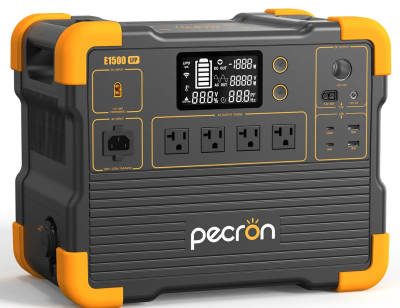 “Solar Generators” (power stations, power packs) are not actually generators. They are basically just a self-contained electrical system in a box, containing:
These devices are packaged for convenience and are usually more expensive than the components bought separately, but not always. For vandwellers with small-to-medium (And even potentially large) power needs, there's a lot of reasonable options on the market these days.
As of the writing of this page (2026), the only use case where you probably cannot use one of these systems is if your power needs are EXTREMELY large, such as running a roof-mounted air conditioner or trying to do extensive cooking with electricity. For those use cases, you'll still need to build your own power system from scratch.
Common Brands
This isn't an endorsement of any brand or specific model, but here's some links to a few manufacturers who offer systems that might have a lot of utility for the van dweller at reasonable prices and quality.
Some other common “premium” brands are Jackery and Goal Zero (Yeti). There are less-famous brands like Rockpals, ExpertPower, Aimtom, Nexpow, etc.1) They tend to be named after the watt-hours2) of battery capacity3), or sometimes by the inverter output rating.
Some manufacturers often sell proprietary panels (Jackery Solar Saga, etc) which are needlessly expensive. Do the homework and find out which normal panels can work with your device;4) most will require an adapter. Will Prowse recommends devices with MPPT controllers.
The Upsides
Again, it's about convenience and speed. These offer mostly complete systems right out of the box in a push-button-turn-on package.
Historically they were limited by very small internal batteries, but these days most manufacturers offer add-on battery packs that can greatly expand the capacity (although typically with proprietary connectors between them, so you have to use the same family of power packs/power stations)
The Downsides
Weirdly, the most problematic part of these things is often the limited 12v power systems.
12v Charging
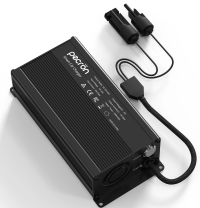 While these power stations can often charge pretty quickly (Within an hour or few) from a standard wall power outlet, or can input many hundred watts of solar at a time, their 12v charging is often limited to just a ciggarette lighter outlet which tops out around 120w. This could take literal days to charge some of the larger power banks.
Different manufactuers offer various ways around this, usually with some kind of an “Alternator Charging” add-on which needs to be installed onto the vehicle battery system. Really what they are is high-current Buck/Boost converters that take the 12v power from the car's electrical system, upconvert it to 20-40v, and input it to the power station through the Solar inputs.
It sounds kinda silly, but it actually works pretty well.
Another optional way around this is with a second cheap ~1500w inverter that is hooked up to the vehicle battery system and is only used while the engine is running, which is then used to charge the Power Station via the factory A/C power adapter.
12v Discharging
Another problem is that many of these power stations can't actually output much 12v power, often offering just a single cigarette lighter outlet. Again, this is limited to 120w, which is not enough to power the startup/shutdown of things like a diesel heater.
There's less options for how to fix this well. Some units like the Pecron E1500LFP offer an XT60 12v output connector, which can do up to 30amps (360w). This isn't much, but it's enough to power a small 12v house system with some lights, a small fridge, and a diesel heater.
The assumption is that the high-draw loads (microwaves, electric tea kettles, larger laptops, etc) would be powered off of the power station directly.
Other Gotchas
Less expensive “solar generators” may cut corners by using more basic batteries (AGM vs Lithium), cheaper inverters (Modified sine wave instead of pure sine wave), or less efficient solar charge controllers (PWM instead of MPPT). The aformentioned problems with charging or supplying 12v power are also not a universally solved problem.
Sometimes the term jump pack is used for portable battery packs in general, but it often means packs intended to jump start a vehicle. Battery pack usually means small, pocketable “bricks” for charging phones and other small devices.
In the olden days manufacturers use non-standard panel connectors to keep customers in an expensive “walled garden”, but post-2025 things have gotten very standardized and most manufacturers will be using standard 5.5mm barrel plugs for small loads, or XT60 connectors for larger loads.
Connections between the “Power Bank” and any add-on battery packs is usually proprietary though, so it's a good idea to try and buy your entire expected capacity at once.
From here below is some older info, back from the early 2020s when these things were ludicrously expensive and the market wasn't nearly as mature. We're leaving it here for historical reference and because there's some good info, but some of it might not actually make sense in the 2026+ world (For example, there's not a power station on the market these days that doesn't support simultaneous charging and discharging, while that was a very real problem with cheap units in the 2015 era)
Best case scenario
The best use of these “generators” is someone who:
- Has little technical knowledge of electricity and battery chemistries, and no interest in obtaining any
- Is short on time and needs a solution quickly
- Has small to medium power needs, or does not need long run time.
- Can charge from shore power when away from the camper
- May need to bring their power source well outside of their vehicle for recreational or work reasons
A solar generator may also be useful for people who want to move the battery between different vehicles.
troubleshooting
see this article
Specifications
Specs for these devices are often given in nonstandard or even misleading ways. The following discussion will use the Yeti shown above, although their product description is better than most.
TLDR
We are most interested in
- how much capacity the bank has (typically in Watt-hours, Wh)
- charging limits
- by car adapter (typically ≤120w because of limitations of the ciggy port)
- by wall adapter (volts and amps, sometimes the stock wall charger makes lower power than is otherwise possible)
- by solar (Voc and input current, which will dictate which panels and how many are suitable)
- DC output (typically 10A at 12v)
- AC output (given as Watts, the biggest AC loads you can run)
capacity
Capacity is most often listed in Wh (watt-hours), which makes comparison quite easy. Some (especially lead cells) retain Ah ratings. For lead batts, 12v x the Ah rating = Wh. Sometimes Ah are expressed as mAh, or 1/000th of an Amp. Which is more impressive, 33Ah or 33,000mAh? They are the same capacity expressed in different ways.
Nefarious marketers sometimes multiply each cell's Ah rating times the number of cells, resulting in a 3x inflation of Ah rating.
usable capacity
Most people know that only about 50% of lead batt capacity should be used in order to ensure a long life. Lithium also has a recommended safety margin, 20%. This means 80% of the rated capacity can be used and still hit the manufacturer's cycle life claims. 400Wh x 0.8 = 320Wh usable.
With 320Wh usable we could run the a theoretical 400w inverter at max load for 48minutes. (320Wh / 400W x 60 minutes)
cell chemistry
The cell chemistry is likely 3.6v Li-NMC5) unless LiFePO4 is stated. The chemistry has significant impact on both battery cycle life and solar charging behavior.6)
Li-NMC are typically 3.6v cells arranged three in a row (3S) for nominal 10.8v. Actual voltage will vary from 9v-12.6v.7) Li-NMC are rated ~500 cycles to 20% state of charge.
LiFePO4 are typically 3.2v cells arranged four in a row (4S) for nominal 12.8v and actually ~12.1v - 14.0v. LiFePO4 are ~2000-3000 cycles to 20% SoC.
SLA (lead) batteries aren't used much anymore, but if present they are nominal 12v and actually ~12.1-14.6v. SLA as found n SGs are capable of ~500 cycles to 50% SoC.
inverter
The inverter will usually be pure sine wave, but lower-priced units that do not specify may be modified sine wave. See the linked article for information about MSW and electronics.
Inverters are typically rated on their continuous output but unscrupulous marketers may list the peak load, which is a temporary overload.
solar input
If the controller type isn't claimed to be MPPT it is likely PWM.
solar charging limits
also see this article on choosing panels for a SG
Many smaller units have quite restrictive solar input limits.
- voltage - 24Voc is a common voltage limit, effectively limiting one to 12v nominal panels. Input voltage limits must not be exceeded. Note: some very large units have high input minimums, like 50v.
- current limit - 3A is a common input current limit on smaller, less-expensive units. 8A is a common limit on larger units.
- With PWM controllers the max power harvestable will be 3A x [internal battery voltage], which can be as low as 9v. 9v x 3A 27w. PWM input current limits must not be exceeded
- MPPT controllers with the same limit might run the panels at 18v, the Vmp: 18v x 3A = 54w8) MPPT incoming current limits can usually be exceeded; the controller will throttle back incoming current to hold the limit. The allowable amount of overpanel is well-documented with most standalone MPPT controllers but “power stations” are usually black boxes with no published overpanel spec. Proceed at your own peril.
the Amp bottleneck
Because the Amp limit is usually the limiting factor for MPPT power production. Selecting a panel with a Voc9) closer to the unit's input limit10) can make maximal power given the limitations. This is because for a given rated output like 100w a higher Vmp (volts) means a lower Imp (amps).
- 22.5Voc panel - Vmp ~18v.11) 18v x 8A limit = 144w.
- 21Voc panel - Vmp ~16.8v. 16.8v x 8A limit = 134w.
pass-through charging
Pass-through charging is an important feature, as it allows you to run DC/USB/AC while charging the unit12) While passing-through keep an eye on the unit's temperature and discontinue one or the other if it gets too warm.
A unit with pass-through would maximize charging while driving. The SG and attached devices would charge.
12v ciggy port -> SG -> other devices
A unit without pass-through could only charge the SG because the power cannot be “passed through” the SG.
12v ciggy port -> SG
The situation with solar would be even worse, because it might take all day to charge from solar and the SG could not power other devices for that day.
regulated DC output
Since many of the devices don't run at 12v-friendly voltages some of the nicer ones have voltage regulation. This means the output would be a steady 12.8v or 13.4v13) no matter the voltage level of the internal battery pack.
Unregulated 3S packs can drop to 9v, causing some devices to misbehave.
Charging
Using the Yeti above as our example again, the charging requirements are:
5 hours from a wall outlet with the included AC charger; in 13 hours with the available car charger*; or as fast as 8 hours from Goal Zero’s monocrystalline solar panels*
Things to consider:
- will you be near shore power for 5 hours to charge from 110vac?
- It takes 13hrs to charge from a running vehicle because alternator voltage output is relatively low.
- Will you have 8hrs of usable solar harvest? Do check the Vmax and Imax specs for the device if you intend to charge with solar; the max input voltage is usually quite low.
Charging from solar panels
Charging these devices from solar panels will probably be slower than you might expect:
- in the absence of an mppt controller14) panel output will be hamstrung by battery voltage. You may see a device listing 60w max input but specifying a 100w panel for use with it, and now you know why.
- devices with 3S lithium cells will hamstring the panels even worse15)
- long wire runs (as seen with portable panels set outside) result in voltage drops
- sunlight is limited to a certain number of hours. Some units require more hours of charging than there are hours of sunlight in a day.
- it is common for smaller units to have low input voltage limits, like 25v or lower. This restricts the panels you can use for charging.
- it is common for smaller units to have low input current limits for DC charging (Wall adapter, car adapter, or panel). This is particularly restrictive on panel input. Consider these examples using a 3A input limit and 100w panel with 18Vmp.
- 100w panel on MPPT controller - 18v x 3A = 54W16)
- 100w panel on PWM controller - With typical 3S Li-Po batteries input would typically be limited to something like 36w (12v x 3A). Less-common internal AGM batteries would make a bit more since voltage is higher, ~39W (13v x 3A).
Poly panels will typically make slightly more power on normal (non-MPPT) devices due to poly's lower voltage / higher current. Devices with internal MPPT controllers will use both panels equally well because they decouple battery and panel voltages.
Adding MPPT charging
Some of the newer Goal Zeros have MPPT chargers built into them, which does increase their usability. To older models, it can sometimes be added.
goal zero optimizer
Goal Zero makes an optional MPPT controller that installs seamlessly into selected models. Will Prowse damns it with faint praise, noting the 22v solar input voltage limit and relatively modest yield improvements:
It does work better than the PWM on the goal zero… it's worth the money but not as good as a DIY system17) (see below)
Although the DIY mppt setup makes somewhat more than the Optimimizer, the sleek install of the GZ Optimizer may result in a better appearance and portability. The GZ display will not show the charge rate from external controllers.
standalone mppt
It may be possible to run the output of a standalone MPPT controller into a charging port of the device. Remember to configure the controller to put a max voltage in line with what the AC charging adapter puts out.
See this video by Will Prowse.
buck converter
It is possible to place a small DC-DC converter between the panel and input port to get the panel up near max power. Doing so will make it even more important to manually disconnect the panel when charging is complete.
Units that do not mention solar charging in their specs can likely still take solar charging through the DC charging port. Since there may be no controller, manually disconnect the panel when battery voltage creeps up too high. For lead this would be ~15v, and for lithium ~12.3v18). Another rule of thumb is that the cutoff voltage should be no higher than the voltage on the stock DC charger – read its label. Be certain not to exceed the maximum input charging voltage.19)
Another approach might be to place a shunt charge controller between the panel and DC input and limit the voltage automatically that way. This will not work if the DC port does not “show” the controller the battery voltage.
Charging from wall socket
Wall charging is typically fastest because the manufacturer gets total control over the adapter's voltage and current output. Note that they might not include a fast charger to reduce cost or heat stress on the battery.20)
charging from car outlet
Car charging is typically slow because alternator voltage tends to be fairly low21) and ciggy outlet current limited to 10A. Unless one is on a road trip there is probably not enough time spent driving the vehicle to charge the device fully.
It's not *efficient* in the normal sense, but if ciggy charging is running <100w it might make sense to charge the device with the AC adapter running on an inverter rather than from the car charging adapter.
12v ciggy port → small inverter → AC adapter → device
Example: the Bluetti AC50S charges about 2x as fast from the inverter than from the car adapter, due to the AC adapter's higher 27.5v output.22)
charging from isolator
If >120w charging is required while mobile, one solution might be to install an isolator as one would when charging an auxilliary battery. The isolator will pass heavier current into the cabin of the vehicle:
alternator --> isolator –> inverter –> SG's high power wall adapter
As with the ciggy lighter setup above, it's not particularly efficient but while driving the alternator has power to waste.
internal AGM batteries
Some units use AGM batteries. This will greatly reduce cost and provide more normal voltage23) but requires diligent charging or the batteries will fail prematurely. All lead-chemistry batteries need to be fully charged then kept charged as much as possible.
manufacturers
[note: see this reddit post comparing larger units by Wh/$, etc. ]
The most common “premium” brands are Jackery and Goal Zero (Yeti). Bluetti is also gaining traction with a loyal following, and there are less-famous brands like Rockpals, ExpertPower, Aimtom, Nexpow, etc.24) They tend to be named after the watt-hours25) of battery capacity26), or sometimes by the inverter output rating.
The manufacturers often sell proprietary panels (Jackery Solar Saga, etc) which are needlessly expensive. Do the homework and find out which normal panels can work with your device;27) most will require an adapter. Will Prowse recommends devices with MPPT controllers.
Notes: inverter ratings below are the continuous rating, not peak/startup rating. Lithium packs are typically duty-cycle rated to 80% of capacity. Inverter runtime estimates are 100% of continuous rating at 80% DoD and 10% inversion losses.28) Inverters described below are pure sine wave (PSW) unless described as electrical:inverter#modified_sine_wave (MSW).
Jackery
- Explorer 160 - 167Wh. 100w MSW inverter (~72 minutes practical runtime29) at full inverter load). 1x AC outlet. 2x USB. 1x USB-C outlet.30) 6mm DC output jack.31). PWM controller. 14.4v internal.
- Explorer 240 - 240Wh. 200w inverter (~52 minutes). 1x AC outlet. 2x USB. Ciggy port. Some specs mention MPPT controller.32)
- Explorer 300 - 293Wh. 300w inverter (~42 minutes). 2x AC outlet. 2x USB. 1x USB-C33). Covered ciggy port. Used by caratank34).
- Explorer 440 - cannot use Solar Saga panels
- Explorer 500 - 518Wh. 500w inverter (~45 minutes). 3x USB. 2x DC. ciggy port. Original version has a PWM controller; version 2 has MPPT.35)
- Explorer 1000 - 1002Wh @ 21.6v(regulated). 1000w inverter (~43 minutes). 3x AC outlet. 2x USB. 1x USB-C36). Covered ciggy port. DC jack and Anderson37) inputs. MPPT controller. 1000 charge cycles to 80% DoD.
Goal Zero (GZ)
- Yeti 200x - 187Wh @ 14.4v (regulated). 120w inverter (~67 minutes). 1x AC outlet. Ciggy outlet. DC jack outlet. 2x USB. 2x USB-C. MPPT controller. 500 cycles.
- Yeti 400 - 428Wh @ 10.8v (regulated to 12v). 300w inverter (~62 minutes). 2x AC outlets. Ciggy outlet. 1x DC outlet port. 3x USB.
- Yeti 1500x - 1516Wh @ 10.8v (regulated). 2000w inverter (~33 minutes). 2x AC outlets. Ciggy outlet. 2x DC jack outlets. 1x DC Anderson outlet. 2x USB. 2x USB-C. 500 cycles. DC input jack and DC input Anderson jack.
- Yeti 3000x - 2982Wh @ 10.8v (regulated). 2000w inverter (~64 minutes). 2x AC outlets. Ciggy outlet. 2x DC jack outlets. 1x DC Anderson outlet. 2x USB. 2x USB-C. DC input jack and DC input Anderson jack. 500 cycles.
Bluetti
Bluetti provides more information than usual about their specs, outlets, etc. [bravo! – secessus]
- Maxoak AC20 - 200Wh. 120w inverter (~72 minutes). 1x AC outlet. 1x DC jack outlet. 2x USB. 1000 cycles. MPPT controller.39)
- Maxoak AC100 - 1000Wh @ 14.8v (regulated to 13.4v). 600w inverter (~72 minutes). 2x AC outlets. Ciggy outlet.40) 4x usb. 1x USB-C. “Up to” 2500 cycles. MPPT controller.41)
- AC200 Max.
Note: check polarity on models with 30A outlet before use; there are reports the outlet may be wired incorrectly.
Note: check
Ecoflow
- Ecoflow River Pro - 720Wh. 600w inverter (~52 minutes). 3x AC outlets. Ciggy outlet. 2x DC jack outlets. 3x USB. 1x USB-C. Specs do not list MPPT, but website does.43)
Some Ecoflow models have an inverter function they call “X-boost” that appears to drop voltage in order to increase current for heavy loads:
The X-Boost mode is not applicable for all electrical devices. Some devices with a rated power of 600W-1200W that have strict voltage requirements are still not compatible. Please conduct a full test to confirm before usage, so it will not to affect your work. It is recommended to use electrical equipment with heating elements and with a rated power between 600-1200W, such as hair dryers, electric kettles, coffee
Note that the loads mentioned in X-Boost docs are resistance loads (heating coils).
Heads up: there are at least two issues that may affect the Delta Pro: "explosive" failure and reverse polarity.
DIY solar generator
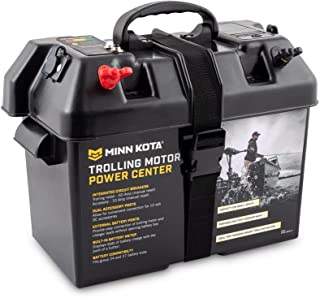 People who want portability or an all-in-one solution can build their own solar generator out of a trolling battery box or milk crate.
In this approach the battery, inverter, solar charge controller, and DC power ports are installed in or on the carrier.
- Will Prowse "milk crate" how-tos (YT)
quirks
The Jackery Explorer 1000 flashlight appears to activate one of the USB ports even when the USB panel is switched off.
The Jackery Explorer 500 solar charge controller is PWM44) while the 500 version 2 appears to be MPPT and capable of handling up to 30v.45)
Some units are tightly focused on inverter (AC) output, and don't have big DC outlets. The Bluetti EB150, for example, maxes out at 9A DC and that is through the ciggy outlet.
1)
, 24)
Cheaper units may be high-value rebadged units, or they may be lacking features. Read and understand the specs so you know what you are buying.
5)
“Li-Po”. Some are even SLA
6)
when PWM charge controllers are used (see below).
7)
Some more expensive models use 4S for 12v-14.4v but this is uncommon.
8)
minus DC-DC conversion losses of ~5%
9)
not Vmp
10)
with some headroom
11)
Vmp is typically 0.8 of Voc
12)
some units will pass through DC but not power the inverter for AC. Check the specs and reviews carefully/
13)
whatever they decide
14)
sometimes present on higher-end devices
15)
3S Li voltage can be as low as 9v, and maxxes around 12.5v.
16)
In practice it will be even lower due to cell temperature derating. 10% derating would put max input around 49w.
17)
ie, external charge controller. See https://www.youtube.com/watch?v=rqXscD69RvM
18)
assuming 3S
19)
typically 20-25v for built-in MPPT controllers. Standalone controllers typically can handle much higher input voltages – check the specs.
20)
particularly for Li
21)
particularly for charging lead
23)
compared to 3parallel_serial lithium
28)
Jackery advises 15% inverter losses in the Amazon listings, but 10% is used here for consistency
29)
to 80% DoD
30)
discharge only
31)
no ciggy port but port-to-ciggy adapter included
32)
newer model?
35)
“You want the one that states 'Jackery' and underneath 'Explorer 500'.” - from an Amazon review
37)
for use with included parallel panel adapter
38)
one will also charge
39)
“Input Voltage must be 14V-40V”
40)
9A
41)
“working voltage is >16V,Open circuit voltage(OCV) <45V, the Max. output current is max.10A,Max. 170W”
42)
“Open Circuit Voltage between 35V-150V, Max.12A, Max.700W”, so at least 24v of nominal panel
43)
“You can connect 1 110W solar panel or 2 sets of 110W solar panels in parallel”
44)
maybe shunt
lifestyle/faq_solar_generator.txt · Last modified: 2026/08/13 14:16 by princess_fluffypants
affilliate disclosure | the RVwiki runs on a virtual server from NetCup
Except where otherwise noted, content on this wiki is licensed under the following license: CC Attribution-Noncommercial-Share Alike 4.0 International


